Jobs in Precision Manufacturing: Building the Workforce Behind Tomorrow’s Advanced Industries
The manufacturing industry has undergone a remarkable transformation over the past decade, evolving from traditional production methods to highly advanced, technology-driven processes. Today, precision manufacturing stands at the forefront of this revolution, producing components with extraordinary accuracy for industries such as aerospace, automotive, healthcare, electronics, renewable energy, defense, and semiconductor manufacturing. As industries demand products with tighter tolerances, greater reliability, and superior quality, Jobs in Precision Manufacturing are becoming some of the most valuable and future-focused career opportunities available. Professionals equipped with technical expertise, digital skills, and innovative thinking are increasingly sought after to support this rapidly expanding sector.
Precision manufacturing combines engineering excellence with advanced technologies including computer numerical control (CNC) machining, robotics, automation, additive manufacturing, artificial intelligence, computer-aided design (CAD), computer-aided manufacturing (CAM), and real-time quality monitoring. These innovations enable manufacturers to produce highly accurate components while minimizing waste, improving efficiency, and maintaining consistent quality. As global industries continue investing in smart factories and digital production systems, Jobs in Precision Manufacturing are experiencing unprecedented growth.
Unlike conventional manufacturing roles, careers in precision manufacturing involve continuous technological advancement, sophisticated engineering, and problem-solving. Professionals entering this field enjoy opportunities to work on cutting-edge projects while contributing to industries that shape transportation, healthcare, energy, communications, and national infrastructure. The increasing adoption of Industry 4.0 technologies ensures that Precision Manufacturing Careers will remain highly relevant for decades to come.
The Growing Importance of Precision Manufacturing
Precision manufacturing has become essential because modern products require components manufactured with exceptional accuracy and consistency. Aircraft engines, medical implants, electric vehicle batteries, semiconductor chips, surgical instruments, industrial robots, and renewable energy systems all depend on precisely engineered parts capable of performing reliably under demanding conditions.
As product complexity increases, manufacturers must adopt advanced production techniques capable of meeting strict quality requirements while maintaining efficiency. This growing demand has significantly expanded Jobs in Precision Manufacturing, creating opportunities for engineers, machinists, automation specialists, quality experts, software developers, and production managers.
Companies investing in advanced manufacturing technologies recognize that precision directly influences product performance, customer satisfaction, regulatory compliance, and long-term competitiveness. Consequently, skilled professionals capable of supporting precision manufacturing operations have become invaluable assets across numerous industries.
Why Jobs in Precision Manufacturing Are Expanding Rapidly
Several global trends continue driving the rapid expansion of Jobs in Precision Manufacturing. The increasing demand for electric vehicles has accelerated investment in battery manufacturing, lightweight materials, and high-performance mechanical components. Aerospace companies require precision-engineered parts capable of meeting rigorous safety and reliability standards.
Medical technology manufacturers depend on advanced production techniques to create highly accurate implants, diagnostic equipment, and surgical instruments. Semiconductor manufacturers require microscopic precision during chip fabrication, while renewable energy companies invest in precision components for wind turbines, solar systems, and hydrogen technologies.
Governments worldwide are supporting domestic manufacturing through industrial development initiatives that encourage investment in smart factories, robotics, and automation. These efforts continue creating employment opportunities while strengthening long-term career stability.
Career Opportunities in Precision Manufacturing
One of the greatest strengths of Precision Manufacturing Careers is the wide variety of specialized professional roles available. Manufacturing engineers develop production processes that maximize efficiency while maintaining exceptional product quality. Their responsibilities include process optimization, equipment selection, workflow improvement, and production planning.
CNC programmers create detailed machining instructions that guide automated equipment during component manufacturing. Their expertise ensures consistent accuracy while minimizing production errors and material waste.
Quality assurance engineers inspect manufactured components using advanced measurement technologies to verify compliance with strict engineering specifications. Their work supports product reliability while reducing costly manufacturing defects.
Automation engineers design robotic production systems capable of performing repetitive tasks with outstanding precision. CAD/CAM engineers develop digital product models and manufacturing programs that support efficient production workflows.
Industrial maintenance specialists maintain sophisticated manufacturing equipment, minimizing downtime while ensuring operational reliability. Metrology engineers specialize in advanced measurement techniques used to verify dimensional accuracy throughout production processes.
Production managers coordinate manufacturing operations while balancing productivity, quality, safety, and cost-effectiveness. Supply chain specialists ensure timely availability of materials required for uninterrupted production.
Skills Required for Precision Manufacturing Careers
Success in Jobs in Precision Manufacturing requires a combination of engineering knowledge, technical expertise, and digital competencies. Educational backgrounds in mechanical engineering, manufacturing engineering, industrial engineering, mechatronics, robotics, electronics, or production technology provide excellent preparation for entering the industry.
Professionals benefit from understanding CNC machining, CAD/CAM software, robotics, automation systems, quality management, materials science, manufacturing processes, industrial safety, and production planning. Knowledge of programming languages, industrial sensors, artificial intelligence, machine learning, and data analytics further strengthens employability as smart manufacturing continues expanding.
Strong analytical thinking, problem-solving abilities, attention to detail, communication skills, teamwork, and adaptability also contribute significantly to career success. Precision manufacturing environments require professionals capable of identifying improvements while responding effectively to evolving production challenges.
Smart Factories Are Transforming Manufacturing Careers
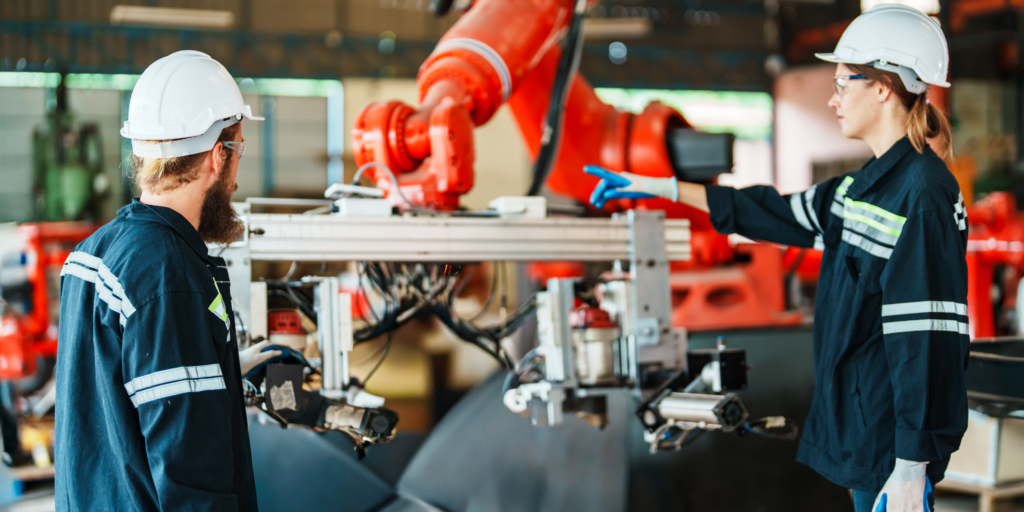
The emergence of smart factories has fundamentally reshaped Jobs in Precision Manufacturing. Industry 4.0 technologies integrate automation, artificial intelligence, cloud computing, Internet of Things (IoT) devices, digital twins, and predictive maintenance into modern production environments.
Machines equipped with intelligent sensors continuously monitor equipment performance, detect abnormalities, and predict maintenance requirements before failures occur. This proactive approach improves productivity while reducing costly downtime.
Artificial intelligence optimizes production scheduling, quality inspection, inventory management, and resource utilization. Collaborative robots work alongside human operators, increasing manufacturing efficiency while enhancing workplace safety.
Digital twins enable engineers to simulate manufacturing processes virtually before implementing changes in real production environments. These technological innovations create exciting career opportunities for professionals capable of combining engineering expertise with digital technologies.
Industries Creating Precision Manufacturing Jobs
The demand for Precision Manufacturing Jobs extends across a broad range of industries. Aerospace manufacturers require precision-engineered aircraft components capable of meeting strict international safety standards. Automotive companies depend on advanced manufacturing to produce electric vehicle systems, engines, transmissions, and lightweight structural components.
Healthcare organizations require medical implants, prosthetics, surgical instruments, and diagnostic equipment manufactured with exceptional accuracy. Semiconductor companies produce microchips using highly precise fabrication techniques that demand advanced manufacturing expertise.
Renewable energy companies manufacture precision components for wind turbines, hydrogen systems, solar technologies, and battery storage solutions. Defense industries require reliable equipment manufactured to exact engineering specifications, while consumer electronics companies produce sophisticated devices using precision manufacturing technologies.
Industrial machinery, telecommunications, robotics, marine engineering, railway systems, and space exploration further expand employment opportunities across the manufacturing ecosystem.
Education and Professional Development
Students pursuing Jobs in Precision Manufacturing can choose degrees in mechanical engineering, manufacturing engineering, industrial engineering, mechatronics, robotics, automation, production engineering, or advanced manufacturing technology. Vocational training programs also provide practical pathways into specialized technical roles.
Hands-on laboratory experience, industrial internships, apprenticeship programs, and collaborative university-industry projects significantly improve employability by providing practical exposure to modern manufacturing environments.
Professional certifications in CNC programming, quality management, robotics, CAD/CAM software, project management, industrial automation, and lean manufacturing further strengthen career profiles. Continuous learning remains essential because manufacturing technologies evolve rapidly through ongoing innovation.
Global Career Growth and Salary Potential
The worldwide expansion of advanced manufacturing has created exceptional opportunities for professionals pursuing Jobs in Precision Manufacturing. Countries including Germany, Japan, South Korea, the United States, Switzerland, Singapore, India, China, and several European nations continue investing heavily in smart manufacturing infrastructure.
Experienced professionals enjoy competitive salaries, international mobility, and opportunities to work with world-leading technology companies. As expertise develops, engineers often advance into leadership positions overseeing manufacturing operations, research and development, automation strategy, quality management, or industrial consulting.
Global demand for precision manufacturing expertise continues increasing as industries prioritize innovation, sustainability, and technological competitiveness.
Challenges That Inspire Innovation
Although precision manufacturing offers significant career opportunities, the industry also presents demanding technical challenges. Manufacturers must continuously improve production accuracy, reduce costs, enhance sustainability, minimize waste, and integrate rapidly evolving technologies while maintaining exceptional quality standards.
Rather than discouraging professionals, these challenges encourage continuous innovation and lifelong learning. Engineers, technicians, software developers, and manufacturing specialists collaborate to develop creative solutions that improve productivity and product performance.
The dynamic nature of precision manufacturing ensures intellectually engaging work while providing opportunities to contribute directly to technological progress across multiple industries.
Why Precision Manufacturing Is a Future-Proof Career
One of the strongest reasons to pursue Jobs in Precision Manufacturing is the industry’s resilience during technological transformation. As artificial intelligence, automation, electric mobility, renewable energy, robotics, and digital infrastructure continue expanding, demand for precisely manufactured components will only increase.
Organizations require professionals capable of operating sophisticated manufacturing systems while adapting to emerging technologies. Individuals specializing in Precision Manufacturing Careers, Advanced Manufacturing Careers, Smart Manufacturing Jobs, Manufacturing Technology Careers, and Industry 4.0 Careers will remain highly valuable because precision production forms the foundation of countless modern industries.
Continuous investment in digital factories, sustainable manufacturing, and advanced engineering ensures long-term career stability while creating abundant opportunities for specialization and professional growth.
Conclusion
Jobs in Precision Manufacturing represent one of the most exciting and future-ready career paths within today’s industrial landscape. As manufacturing becomes increasingly intelligent, automated, and digitally connected, organizations require skilled professionals capable of delivering exceptional accuracy, innovation, and operational excellence.
From aerospace and healthcare to renewable energy, semiconductors, automotive engineering, and robotics, precision manufacturing supports industries that define the future of technology and economic development. Professionals pursuing Precision Manufacturing Careers, Advanced Manufacturing Careers, CNC Machining Jobs, Industrial Automation Careers, and Manufacturing Innovation Careers gain access to rewarding careers characterized by continuous learning, competitive salaries, international opportunities, and long-term stability.
Choosing a career in precision manufacturing means becoming part of an industry where engineering expertise, digital transformation, and technological innovation come together to build products that improve lives around the world. As smart factories continue evolving and advanced production technologies reshape global manufacturing, professionals in precision manufacturing will remain essential to driving industrial progress and sustainable economic growth.