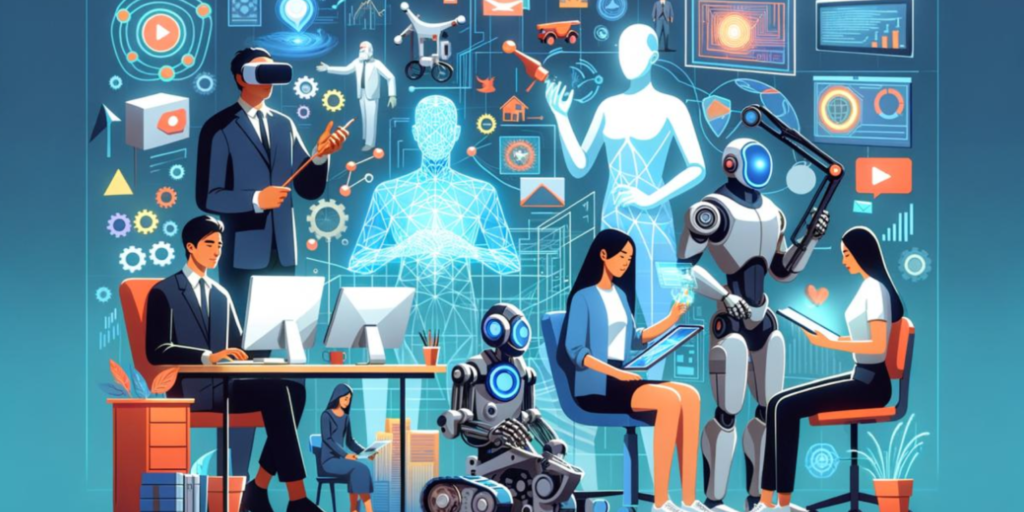
How to Prepare for Careers That Don’t Exist Yet: Building Skills for an Unpredictable Future
The world of work is changing faster than ever before. Technological innovation, artificial intelligence, automation, sustainability, biotechnology, robotics, data science, quantum computing, digital transformation, and global connectivity are reshaping industries at an unprecedented pace. Many professions that are highly valued today did not exist just a decade ago, while numerous future job roles are still being imagined, researched, or developed. This rapid transformation makes How to Prepare for Careers That Don’t Exist Yet one of the most important questions students, graduates, and professionals can ask in today’s evolving employment landscape.
Unlike previous generations, where individuals often followed predictable career paths within a single profession, modern workers are increasingly expected to adapt continuously as industries evolve. Future careers may involve technologies still under development, business models yet to emerge, or interdisciplinary roles combining expertise from multiple fields. As a result, preparing for tomorrow’s workforce requires more than mastering current technical knowledge. It demands adaptability, curiosity, lifelong learning, creativity, emotional intelligence, and the willingness to embrace continuous change.
Educational institutions, employers, governments, and technology companies all recognize that the future workforce will depend upon skills capable of evolving alongside innovation. Understanding How to Prepare for Careers That Don’t Exist Yet allows individuals to develop resilient career strategies that remain valuable even as specific job titles, industries, and technologies continue changing throughout their professional lives.
Why Future Careers Are Changing So Quickly
One of the main reasons How to Prepare for Careers That Don’t Exist Yet has become increasingly important is the remarkable speed of technological advancement. Artificial intelligence, cloud computing, automation, renewable energy, biotechnology, advanced manufacturing, cybersecurity, virtual reality, and digital communication continue transforming nearly every industry.
Many traditional occupations are evolving rather than disappearing entirely. Employees increasingly collaborate with intelligent technologies while performing more analytical, creative, and strategic responsibilities.
Innovation continuously reshapes professional opportunities.
Adaptability becomes increasingly valuable.
The Rise of Emerging Industries
Entirely new industries continue appearing as scientific discoveries and technological breakthroughs reach commercial markets. Fields such as space technology, green energy, precision medicine, AI ethics, climate technology, digital health, autonomous transportation, blockchain development, and smart infrastructure are creating exciting professional opportunities.
Students preparing today may eventually work within industries that remain in early development stages.
Understanding emerging trends strengthens future career planning.
Opportunity often follows innovation.
Lifelong Learning Becomes Essential
Graduating from university no longer represents the end of education. Instead, lifelong learning has become a defining characteristic of successful professionals.
Continuous learning allows individuals to remain relevant despite changing technologies, evolving industries, and expanding professional responsibilities.
One of the strongest principles behind How to Prepare for Careers That Don’t Exist Yet involves maintaining curiosity throughout every stage of professional life.
Knowledge continues evolving.
Learning never truly ends.
Develop Adaptability as a Core Strength
Adaptability enables professionals to respond confidently when industries change, technologies evolve, or entirely new career opportunities emerge.
Rather than fearing uncertainty, adaptable individuals view change as an opportunity for growth. They remain willing to acquire new knowledge, develop additional skills, and explore unfamiliar professional environments.
Flexibility supports long-term career resilience.
Change often creates opportunity.

Build Strong Digital Skills
Digital literacy has become essential across virtually every profession. Even careers traditionally unrelated to technology increasingly require familiarity with digital communication, cloud platforms, data analysis, collaboration software, cybersecurity awareness, and artificial intelligence tools.
Building digital confidence prepares students for numerous emerging professions regardless of specialization.
Technology strengthens workplace productivity.
Digital skills remain universally valuable.
Focus on Transferable Skills
Technical knowledge may evolve rapidly, but transferable skills remain valuable throughout changing careers. Communication, leadership, teamwork, analytical thinking, creativity, emotional intelligence, adaptability, critical reasoning, and problem-solving continue supporting professional success across industries.
These competencies allow individuals to transition more easily between different job roles throughout their careers.
Transferable skills create lasting professional flexibility.
Human abilities complement technology.
Learn How to Solve Complex Problems
Future careers will increasingly involve addressing challenges requiring creativity rather than repetitive routine tasks. Employers value individuals capable of evaluating information, developing innovative solutions, and collaborating effectively across multidisciplinary teams.
Problem-solving therefore remains one of the most important future-ready competencies.
Understanding How to Prepare for Careers That Don’t Exist Yet includes strengthening analytical thinking continuously.
Innovation begins with thoughtful problem-solving.
Develop Emotional Intelligence
Artificial intelligence continues improving technical capabilities, yet uniquely human qualities remain essential within modern workplaces. Emotional intelligence enables professionals to communicate effectively, resolve disagreements, understand diverse perspectives, demonstrate empathy, and build meaningful relationships.
These interpersonal strengths remain difficult to automate and increasingly distinguish successful professionals.
Human connection supports collaboration.
Empathy strengthens leadership.
Embrace Interdisciplinary Learning
Many future professions will combine expertise from multiple academic disciplines. Healthcare increasingly integrates artificial intelligence, engineering collaborates with environmental science, business incorporates data analytics, and education adopts digital technologies.
Students willing to learn beyond traditional academic boundaries often become better prepared for emerging careers.
Cross-disciplinary knowledge encourages innovation.
Broader perspectives create opportunities.
Gain Practical Experience Early
Internships, volunteer projects, entrepreneurship, research participation, hackathons, innovation competitions, and freelance experiences expose students to real-world challenges while strengthening professional confidence.
Practical experience also develops adaptability because learners regularly encounter unfamiliar situations requiring creative solutions.
Experience transforms theoretical learning into practical competence.
Action strengthens confidence.
Build a Strong Professional Network
Networking provides valuable access to emerging industries, mentorship opportunities, collaborative projects, and professional insights unavailable through textbooks alone.
Relationships with professors, alumni, industry experts, entrepreneurs, and fellow students often introduce future career opportunities before they become widely recognized.
Meaningful connections strengthen career development.
Collaboration encourages lifelong learning.
Stay Informed About Industry Trends
Future-ready professionals regularly monitor technological developments, research discoveries, economic changes, sustainability initiatives, policy updates, and global workforce trends.
Reading industry publications, attending webinars, participating in conferences, and following respected experts helps individuals anticipate changing career opportunities.
Knowledge supports informed career planning.
Awareness reduces uncertainty.
Develop Entrepreneurial Thinking
Entrepreneurial thinking extends beyond launching businesses. It encourages initiative, creativity, opportunity recognition, calculated risk assessment, resilience, and continuous innovation.
These qualities remain valuable within corporations, research institutions, startups, nonprofit organizations, and public service.
Entrepreneurial mindsets adapt effectively to changing environments.
Innovation begins with initiative.

Strengthen Communication Skills
Future careers will continue requiring professionals capable of explaining complex ideas clearly, collaborating internationally, presenting solutions confidently, and working within diverse teams.
Excellent communication enhances leadership potential while improving workplace effectiveness regardless of technical specialization.
Clear communication strengthens professional influence.
Ideas create value when shared effectively.
Accept Career Changes as Normal
Future professionals will likely experience multiple career transitions rather than following one lifelong occupation. New technologies, changing industries, personal interests, and evolving global priorities may encourage entirely new professional directions.
Viewing career change positively reduces unnecessary anxiety while encouraging continuous development.
Flexibility strengthens long-term success.
Growth often requires adaptation.
Prioritize Ethical Decision-Making
Emerging technologies increasingly raise important ethical questions involving privacy, artificial intelligence, biotechnology, automation, sustainability, and responsible innovation.
Professionals capable of balancing technological advancement with ethical responsibility will become increasingly valuable across industries.
Responsible innovation supports lasting progress.
Integrity strengthens professional trust.
The Role of Higher Education
Universities continue adapting curricula to prepare students for uncertain futures through interdisciplinary programs, digital learning, entrepreneurship, research collaboration, innovation centers, and experiential education.
Students who actively utilize these opportunities often develop broader competencies supporting future career flexibility.
Education increasingly emphasizes adaptability rather than memorization.
Learning evolves alongside society.
Future-Proof Your Career Mindset
Rather than asking which specific jobs will exist decades from now, students benefit more by asking which abilities remain valuable regardless of changing technologies.
Continuous learning, adaptability, communication, creativity, leadership, resilience, curiosity, ethical reasoning, and digital confidence create professional foundations capable of supporting lifelong career success.
This perspective defines How to Prepare for Careers That Don’t Exist Yet more effectively than predicting individual job titles.
Mindset shapes long-term achievement.
Why Preparation Matters More Than Prediction
Predicting every future profession remains impossible. However, preparing thoughtfully for uncertainty remains entirely achievable.
Students who continuously develop transferable skills, practical experience, technological awareness, emotional intelligence, and learning habits remain positioned to succeed regardless of future workforce changes.
Preparation consistently outperforms prediction.
Confidence grows through readiness.
The Future Belongs to Lifelong Learners
The future workforce will increasingly reward individuals who remain curious, adaptable, collaborative, and committed to continuous improvement. Rapid technological change should not be viewed as a threat but as an invitation to expand knowledge, embrace innovation, and discover meaningful opportunities.
Understanding How to Prepare for Careers That Don’t Exist Yet empowers students to approach uncertainty with confidence while building careers capable of evolving alongside changing industries.
Learning becomes a lifelong competitive advantage.
Growth creates opportunity.
Conclusion
How to Prepare for Careers That Don’t Exist Yet is not about predicting every future profession but about building the skills, mindset, and adaptability needed to succeed in an ever-changing world. By embracing lifelong learning, strengthening digital literacy, developing transferable skills, gaining practical experience, expanding professional networks, and remaining open to innovation, individuals prepare themselves for opportunities that have not yet been created.
Whether focusing on Future Careers, Future Skills, Career Preparation, Emerging Careers, Career Readiness, Professional Development, or Future-Proof Careers, success will belong to those who continue learning, adapting, and growing throughout their professional journey.
The careers of tomorrow will be shaped by imagination, technology, collaboration, and continuous discovery. Students and professionals who invest in flexible skills today will not simply adapt to future workplaces—they will help create them.