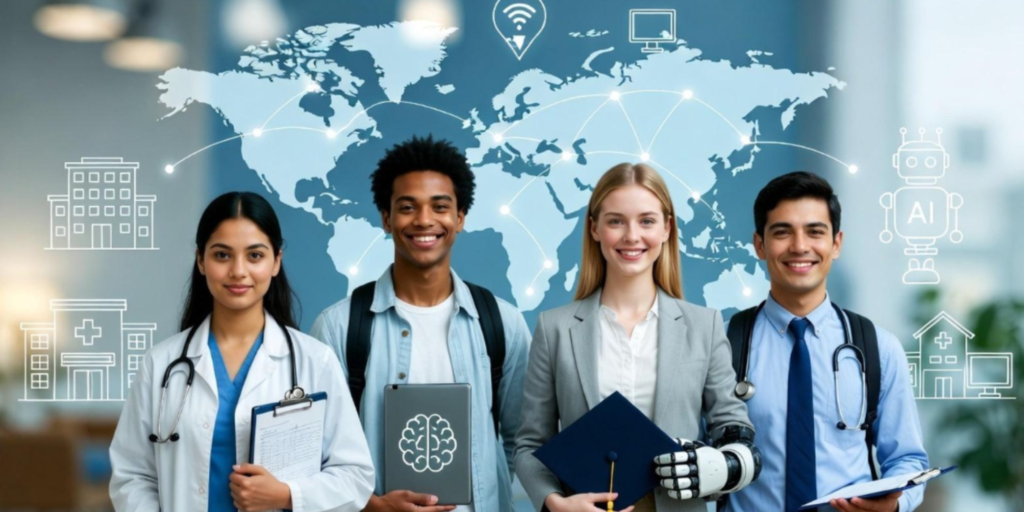
Jobs That Artificial Intelligence Can’t Replace
Artificial intelligence is transforming the modern workforce at an extraordinary speed. In 2026, AI systems are helping businesses automate repetitive tasks, improve customer service, analyze data, generate content, and increase productivity across multiple industries. From healthcare and finance to marketing and software development, technology continues reshaping the global employment landscape in ways that once seemed impossible.
As automation expands rapidly, many professionals feel uncertain about their future careers. Employees across different industries worry that artificial intelligence could eventually replace human workers completely. This fear has increased significantly because companies are adopting AI-powered systems to reduce costs, speed up operations, and improve efficiency.
While AI has undoubtedly changed the nature of work, the reality is more balanced than many people assume. Artificial intelligence can perform calculations, automate repetitive activities, and process large amounts of information, but it still struggles with deeply human abilities such as empathy, emotional intelligence, creativity, ethical judgment, leadership, relationship building, and complex interpersonal communication.
The future workforce will likely reward individuals who combine technical understanding with uniquely human strengths that machines cannot easily imitate. Careers requiring compassion, innovation, adaptability, emotional awareness, strategic thinking, and human connection are expected to remain highly valuable despite technological advancement.
At the same time, professionals who avoid learning new skills or ignore industry changes may face uncertainty in highly automated fields. Adaptability and continuous learning have become essential for long-term career security.
This guide explores the top jobs that artificial intelligence cannot replace in 2026, why these careers remain valuable, the human qualities technology struggles to duplicate, and how professionals can build future-proof careers in an increasingly AI-driven world.
Why Artificial Intelligence Cannot Replace Every Job
Artificial intelligence excels at processing information and automating repetitive systems. However, technology still lacks genuine emotional understanding, moral reasoning, deep creativity, and human intuition.
Many careers involve emotional complexity, unpredictable human behavior, trust-building, and critical thinking that machines cannot fully replicate. Human professionals often understand emotional context, personal experiences, social dynamics, and ethical situations far better than automated systems.
This human advantage continues creating strong demand for careers that rely heavily on emotional intelligence and interpersonal interaction.
Healthcare Professionals Will Remain Essential
Healthcare is one of the strongest industries resistant to complete AI replacement. While artificial intelligence can assist doctors with diagnostics and medical analysis, human healthcare professionals provide compassion, emotional support, ethical judgment, and personal care that technology cannot genuinely reproduce.
Doctors, nurses, therapists, psychologists, and caregivers work closely with patients during emotionally sensitive situations. Patients often require reassurance, trust, empathy, and human communication while facing illness, anxiety, or personal struggles.
Healthcare careers may continue evolving alongside AI systems, but the emotional and ethical responsibilities of medical professionals make full automation extremely unlikely.
The healthcare field can sometimes feel emotionally exhausting because professionals regularly deal with pressure, emergencies, and patient suffering. However, these careers also provide strong purpose, long-term stability, and meaningful human impact.
Teachers and Educators Will Continue Leading Human Development
Education is another field where human connection remains irreplaceable. AI tools can support online learning, generate educational materials, and automate administrative tasks, but real teaching involves motivation, emotional understanding, mentorship, creativity, and personal guidance.
Teachers help students develop confidence, curiosity, discipline, communication skills, and emotional maturity. They adapt learning styles based on student personalities, struggles, and emotional needs in ways machines cannot fully understand.
Students often remember supportive teachers not because of information delivery alone, but because of encouragement, inspiration, and human influence.
Although digital learning technologies continue expanding, educators who combine subject expertise with emotional intelligence are expected to remain highly valuable in future classrooms.

Mental Health Careers Are Increasingly Important
Modern society faces growing mental health challenges, including stress, burnout, anxiety, emotional isolation, and workplace pressure. As a result, psychologists, counselors, therapists, and mental health professionals are becoming more important globally.
Artificial intelligence may assist with basic mental health tools or emotional analysis, but genuine emotional healing requires human trust, compassion, understanding, and personal connection.
People often seek emotional safety and authentic conversation during vulnerable situations. Machines cannot truly understand human pain, trauma, emotional experiences, or personal relationships in the same way trained mental health professionals can.
Mental health careers may feel emotionally demanding because professionals regularly support individuals through difficult situations. However, these careers are likely to remain among the most future-proof professions in the evolving workforce.
Creative Careers Continue Resisting Automation
Creativity remains one of the strongest human advantages despite AI-generated content becoming more common. Writers, designers, filmmakers, musicians, storytellers, branding experts, and creative directors continue providing originality, emotional storytelling, cultural awareness, and artistic expression that technology struggles to duplicate authentically.
Artificial intelligence can generate designs, music, and written content quickly, but truly meaningful creativity often comes from personal experiences, emotions, imagination, cultural understanding, and unique perspectives.
Creative professionals who develop strong personal style, emotional storytelling ability, and innovative thinking are likely to remain valuable even as AI tools become more advanced.
At the same time, repetitive creative tasks may increasingly become automated, meaning creative professionals must continue evolving and improving originality to stay competitive.
Leadership and Management Careers Require Human Judgment
Strong leadership involves far more than task management. Managers, executives, entrepreneurs, and team leaders make strategic decisions while handling emotional dynamics, conflict resolution, motivation, negotiation, and team collaboration.
Artificial intelligence may help businesses analyze data and improve efficiency, but leadership often depends on trust, emotional awareness, adaptability, and complex human decision-making.
Employees usually respond more positively to supportive leaders who understand emotional concerns and workplace relationships rather than purely automated systems.
Poor leadership can create frustration, emotional exhaustion, and toxic workplace culture, while strong human leadership improves motivation and long-term organizational growth.
As workplaces become more technology-driven, emotionally intelligent leaders may become even more valuable.
Skilled Trades Remain Difficult to Automate
Electricians, plumbers, mechanics, technicians, construction specialists, and repair professionals perform hands-on tasks in constantly changing environments. These careers often require physical adaptability, problem-solving, situational judgment, and technical precision.
AI-powered robots may support certain industrial activities, but real-world repair and maintenance work often involves unpredictable situations that require human flexibility and experience.
Skilled trade careers also remain highly valuable because infrastructure, housing, transportation, and industrial systems continuously require maintenance and improvement.
These jobs can sometimes involve physical pressure and demanding environments, but they often provide strong financial stability and long-term demand.
Social Work and Human Services Depend on Empathy
Social workers and community support professionals help people facing difficult life situations involving poverty, trauma, family issues, addiction, abuse, and emotional hardship.
These careers rely heavily on compassion, trust-building, emotional communication, and ethical judgment. Human relationships are central to social work, making full AI replacement highly unlikely.
Professionals in human services often face emotionally intense situations, but their work creates meaningful social impact and community support.
Legal Careers Still Require Human Reasoning
Artificial intelligence can assist legal research and document analysis, but lawyers and legal professionals continue relying on persuasion, negotiation, emotional interpretation, ethics, and courtroom communication.
Complex legal cases often involve emotional nuance, social understanding, moral reasoning, and strategic argument development that machines cannot fully replicate.
Legal professionals who combine technology awareness with strong communication and critical thinking skills are expected to remain highly relevant in future workplaces.
Entrepreneurs and Innovators Will Continue Driving New Industries
Entrepreneurship requires creativity, vision, risk-taking, leadership, adaptability, and strategic innovation. Successful entrepreneurs identify human needs, market opportunities, and emotional consumer behavior in ways AI cannot independently create.
Business innovation often comes from personal experiences, curiosity, cultural awareness, and creative thinking rather than purely automated systems.
Entrepreneurial careers can feel financially uncertain and emotionally stressful initially, but innovation remains deeply connected to human imagination and ambition.
Human Skills Are Becoming More Valuable
As automation handles repetitive technical tasks, human-centered abilities are becoming increasingly important in modern workplaces.
Professionals who strengthen emotional intelligence, creativity, leadership, adaptability, communication, collaboration, and ethical reasoning are likely to remain more secure in future job markets.
Companies increasingly value workers who can solve complex problems, build relationships, understand customer emotions, and lead teams effectively.
Technology may change how people work, but deeply human qualities continue creating long-term professional value.
How to Build an AI-Resistant Career
Professionals preparing for the future should focus on developing both technical understanding and human-centered abilities. Learning digital skills remains important because technology will continue influencing every industry. However, emotional intelligence, communication skills, adaptability, critical thinking, creativity, and leadership are becoming equally essential.
Continuous learning is extremely important because industries are evolving rapidly. People who remain flexible and willing to improve their skills are more likely to succeed in future workplaces.
Avoiding change or depending entirely on outdated skills may create professional instability over time.
Emotional Reality of AI Career Anxiety
Many professionals feel nervous about automation and career uncertainty. Fear of job replacement, industry disruption, and changing technology can create stress, confusion, and emotional pressure.
However, history shows that technological advancement also creates new industries, new roles, and new opportunities. The future workforce will likely reward people who adapt rather than resist change completely.
Maintaining a learning mindset and strengthening human-centered abilities can help professionals feel more confident and future-ready.
Final Thoughts
Artificial intelligence is transforming the modern workforce rapidly, but not every career can be fully replaced by automation. Jobs requiring empathy, emotional intelligence, creativity, leadership, ethical judgment, communication, and human connection continue holding strong long-term value in 2026.
Healthcare professionals, teachers, therapists, social workers, creative experts, leaders, and skilled tradespeople all perform responsibilities deeply connected to human understanding and interpersonal trust.
At the same time, professionals who ignore technological change or avoid skill development may face increasing challenges in automated industries. The future belongs to individuals who combine technical adaptability with uniquely human strengths.
Rather than fearing artificial intelligence completely, professionals should focus on building skills that technology struggles to duplicate. Human creativity, compassion, emotional awareness, and strategic thinking remain powerful advantages in the evolving digital economy.
For students, freshers, freelancers, and working professionals, developing future-proof human skills may become one of the smartest career decisions in the modern AI-driven world.
You May Also Read
Best Work From Home Jobs in 2026: High Paying Remote Careers You Can Start Today
Best Work From Home Jobs in 2026: Flexible Careers With...
Read More
AI & Future Jobs in 2026: Careers That Will Thrive in the Digital Era
AI & Future Jobs in 2026: The Careers Shaping Tomorrow’s...
Read MoreLinkedIn Profile Tips for Job Seekers: Complete Guide to Get More Job Opportunities in 2026
LinkedIn Profile Tips for Job Seekers: How to Stand Out...
Read More